(Reta) is a triple-agonist peptide analogue (GLP-1, GIP, and glucagon receptors) studied for weight loss and metabolic health. For research use only.
$80.00 – $600.00Price range: $80.00 through $600.00
Lorem ipsum dolor sit amet, consectetur adipiscing elit. Ut elit tellus, luctus nec ullamcorper mattis, pulvinar dapibus leo.
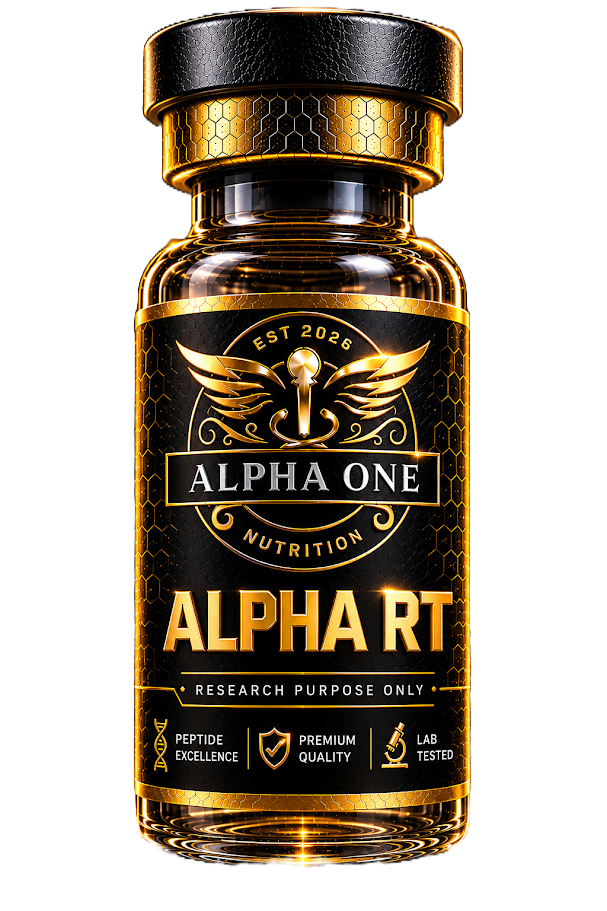
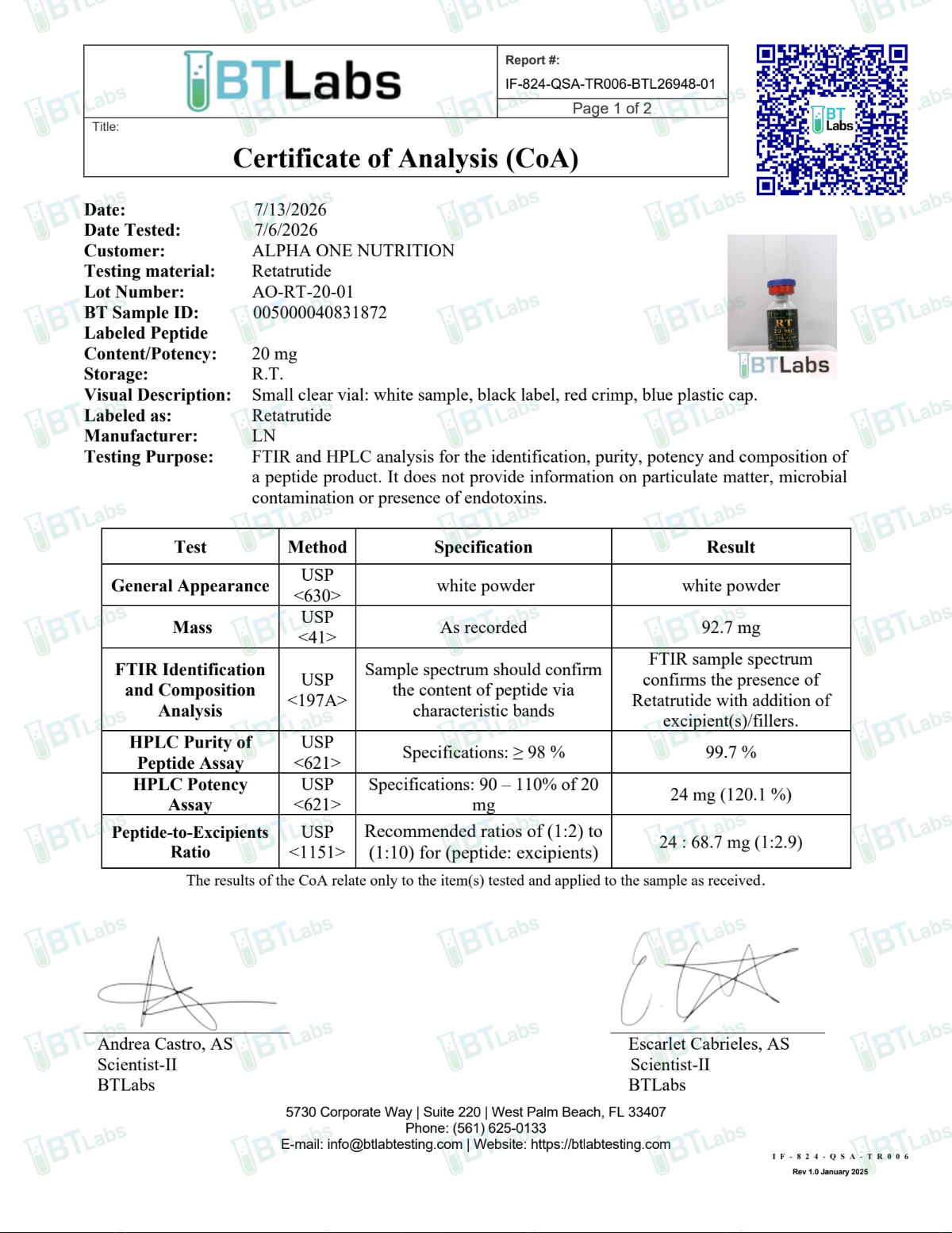
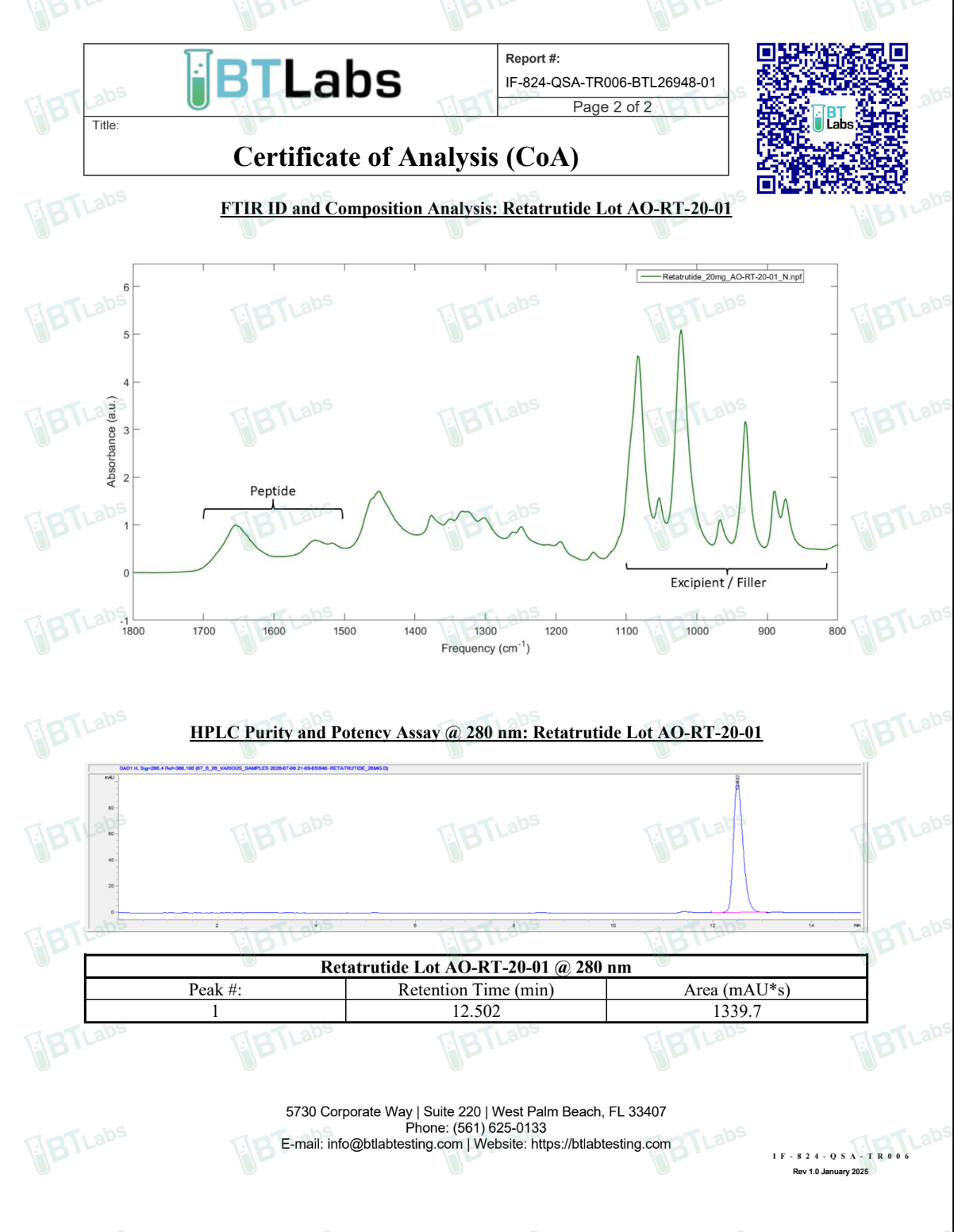
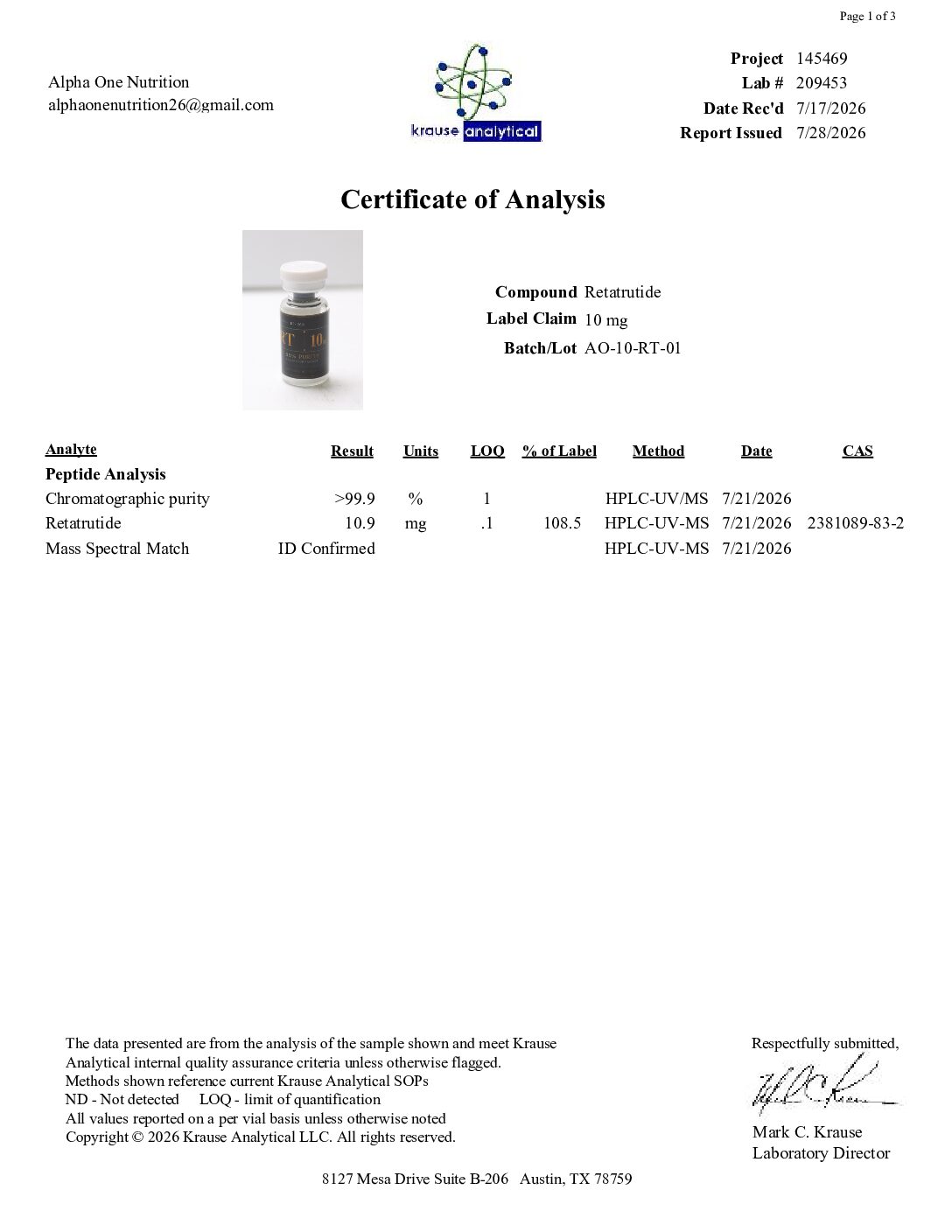
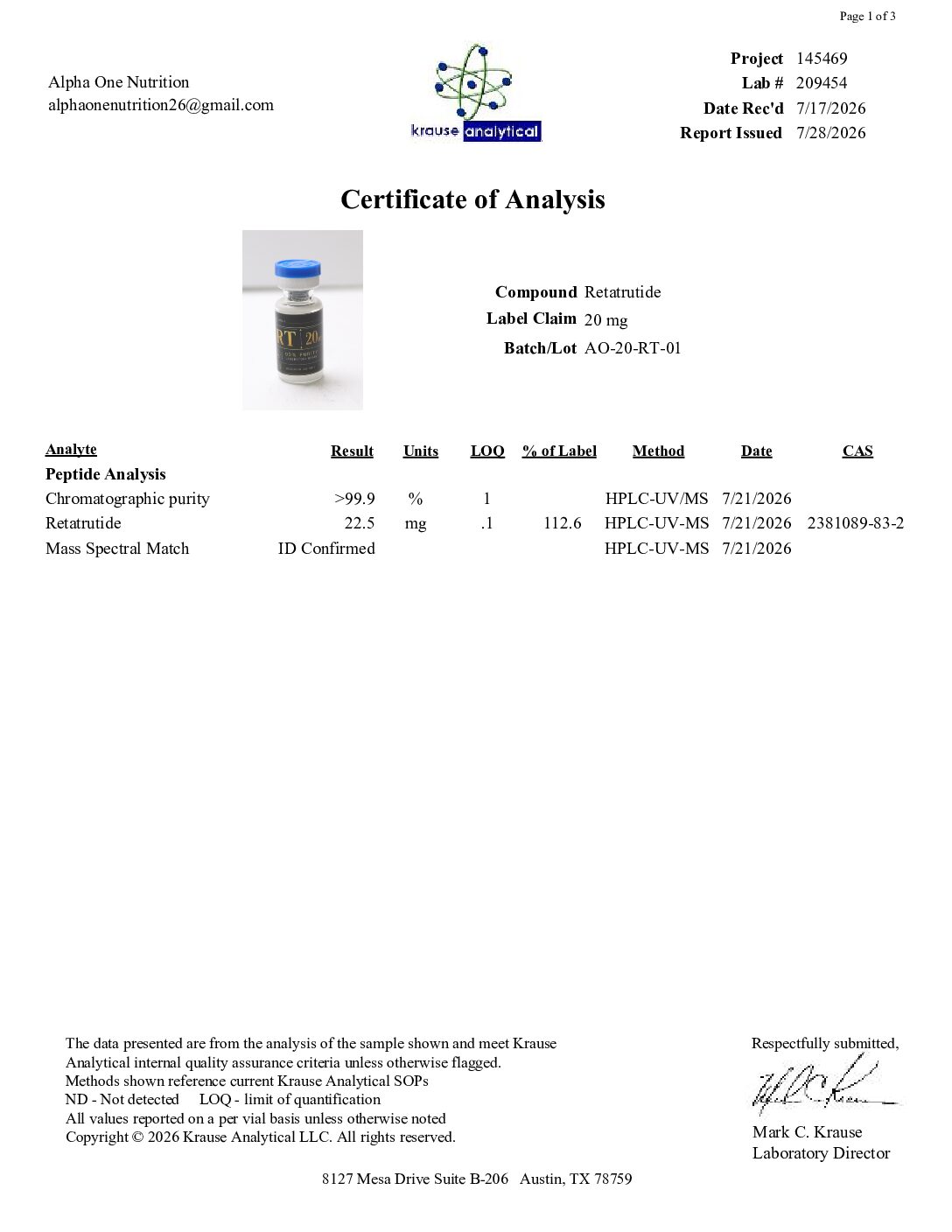
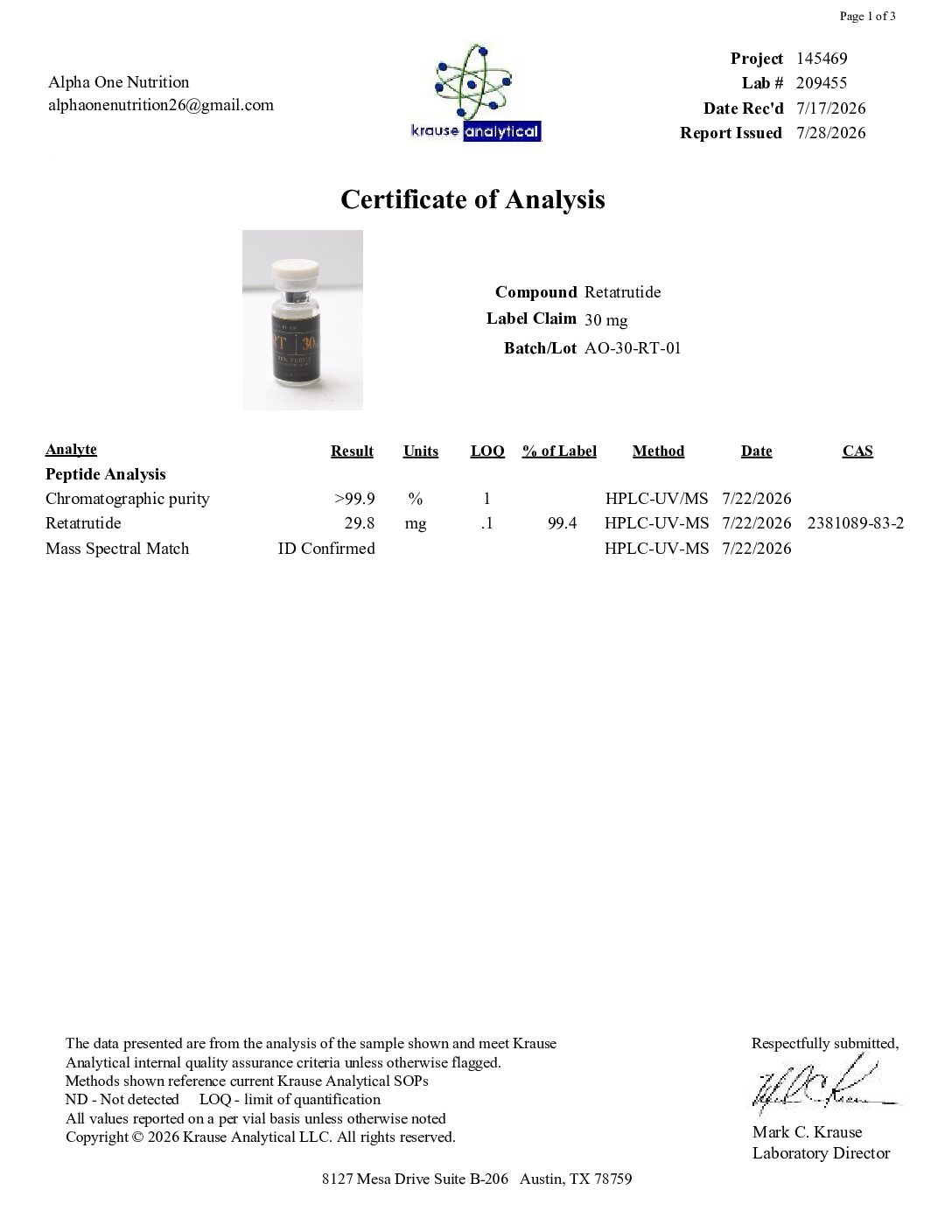
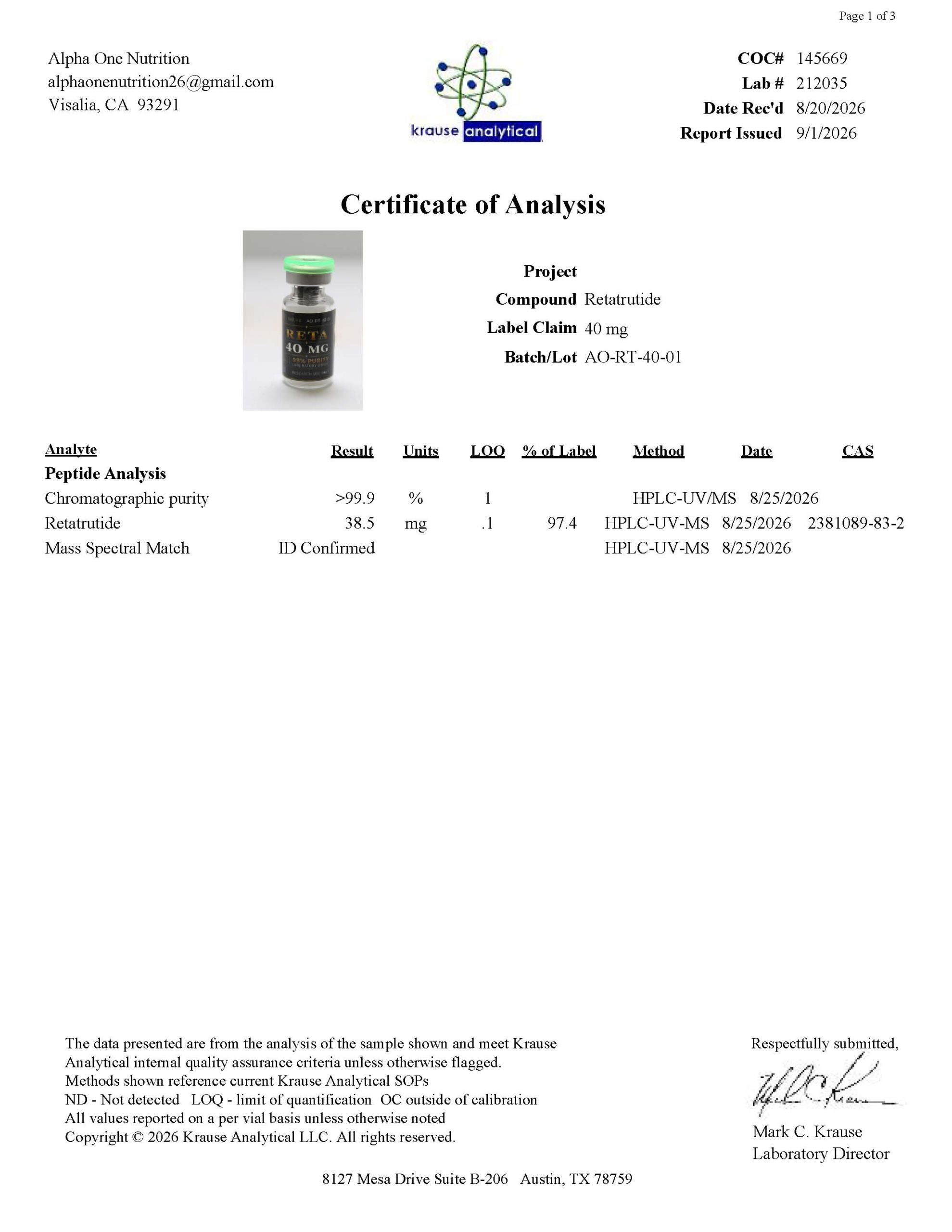
Overview: Alpha RT is a synthetic multi-agonist peptide analogue. It has been designed to activate three key receptors — GLP-1, GIP, and the glucagon receptor (GCGR) — making it distinct from single or dual incretin mimetics. This triple-receptor activity has driven research into its effects on body weight, metabolic health, and glycemic control.
Alpha RT is engineered for extended half-life, supporting once-weekly injection schedules in clinical testing. By engaging three receptors simultaneously, it delivers a broader metabolic effect compared to single- or dual-agonist peptides.
Alpha RT is a next-generation multi-agonist peptide studied for its profound weight loss and metabolic benefits. Its triple action on GLP-1, GIP, and glucagon receptors makes it one of the most promising research compounds in the incretin analogue class.
Research Use Only: Alpha RT is supplied strictly for laboratory and research purposes. It is not approved for human consumption, medical, or veterinary use.
Store at −20 °C (−4 °F) or below. Store in the original vial, sealed and protected from light and moisture until use. Avoid repeated freeze-thaw cycles.
All content and information provided are for educational and research reference purposes only. This product and its associated data have not been evaluated by the U.S. Food and Drug Administration, and no claims are made regarding the diagnosis, treatment, cure, or prevention of any disease. No representations or warranties are made regarding safety, effectiveness, or outcomes.
This product is intended strictly for in vitro laboratory research use only and is not for clinical use. It is not approved for human or animal administration and must not be used in food, dietary supplements, pharmaceuticals, cosmetics, or any consumer applications.
By purchasing from Alpha One Nutrition, the buyer affirms that they are a qualified researcher or institution with the appropriate training, facilities, and authorization to handle research compounds in compliance with all applicable laws and regulations. All sales are final.
| Milligram | 10MG KIT, 20MG KIT, 30MG KIT, 10mg, 20mg, 30mg, 40mg |
|---|
Sign In Before Your Purchase
Sign in to access your account.
Please Create An Account To Check Out
Create your account to access everything you need.
You must be at least 21 years of age All products on this website are to be used strictly only for research purposes. The products on this website must not be used for either human or animal consumption or diagnosing, treating, curing, or preventing any disease.
*You must be at least 21 years of age All products on this website are to be used strictly only for research purposes. The products on this website must not be used for either human or animal consumption or diagnosing, treating, curing, or preventing any disease.
Reviews
There are no reviews yet.