BPC-157, often called the “Wolverine Peptide,” is studied for its regenerative and healing potential in tissues ranging from muscle to gut. For research use only.
$40.00
Lorem ipsum dolor sit amet, consectetur adipiscing elit. Ut elit tellus, luctus nec ullamcorper mattis, pulvinar dapibus leo.
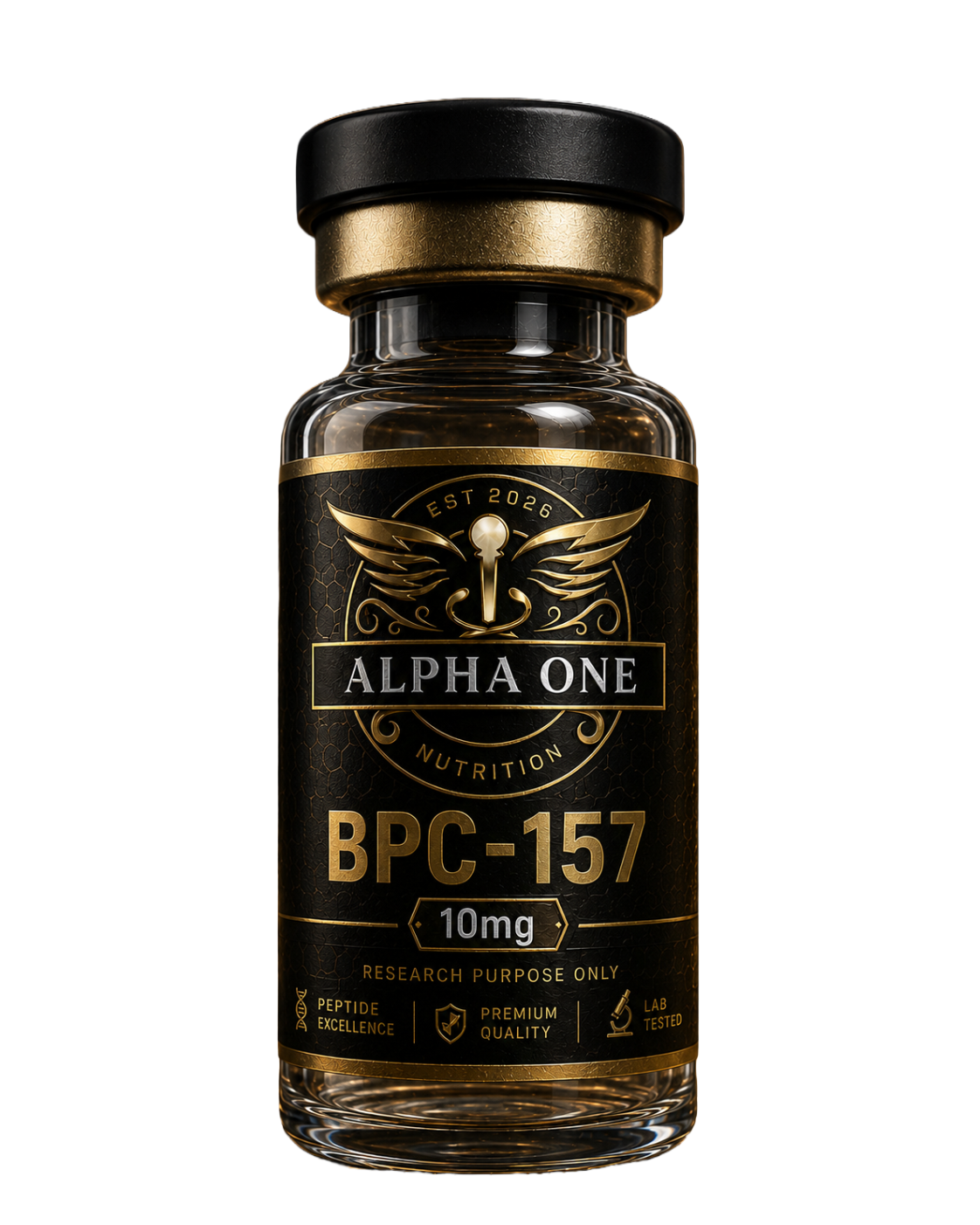
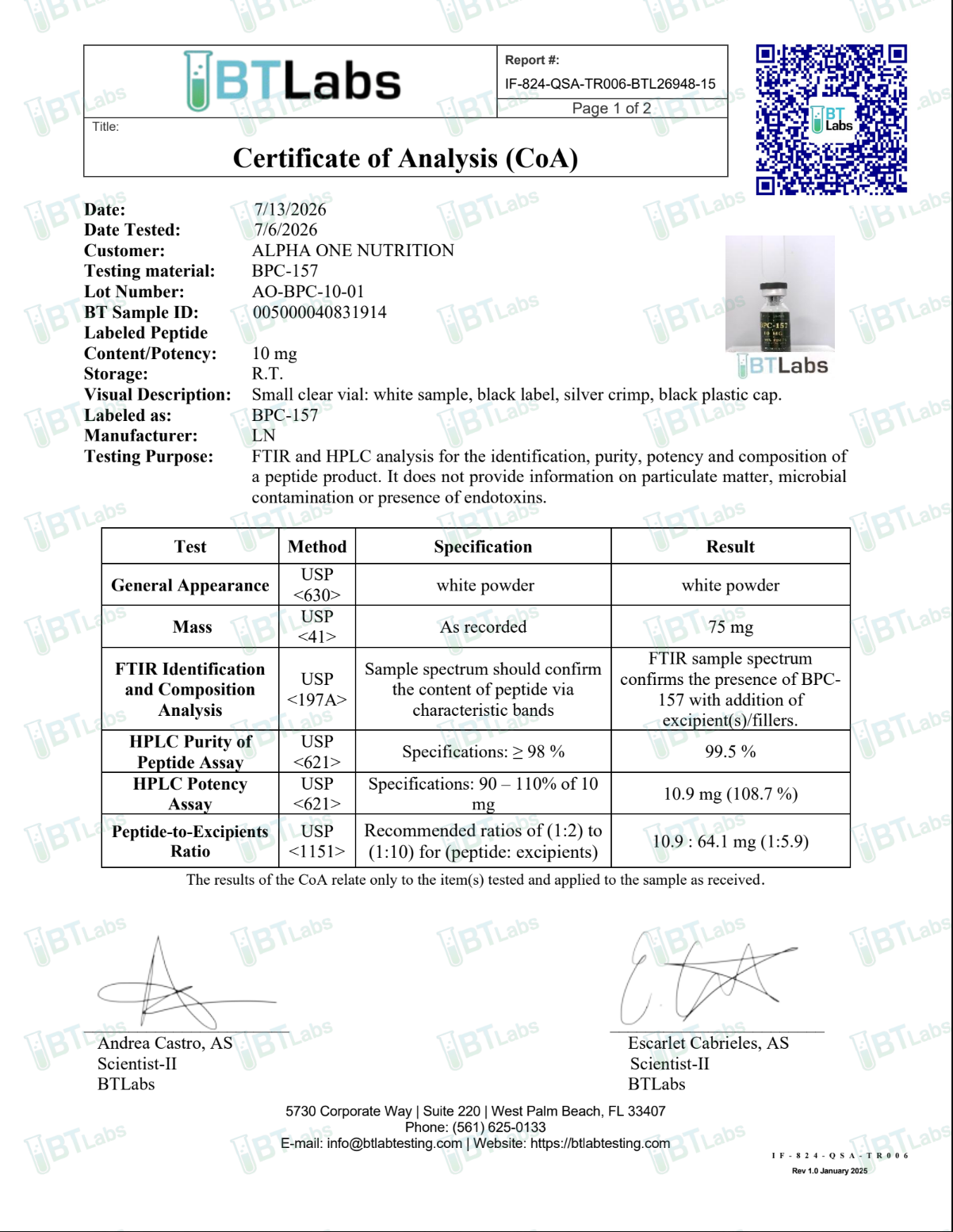
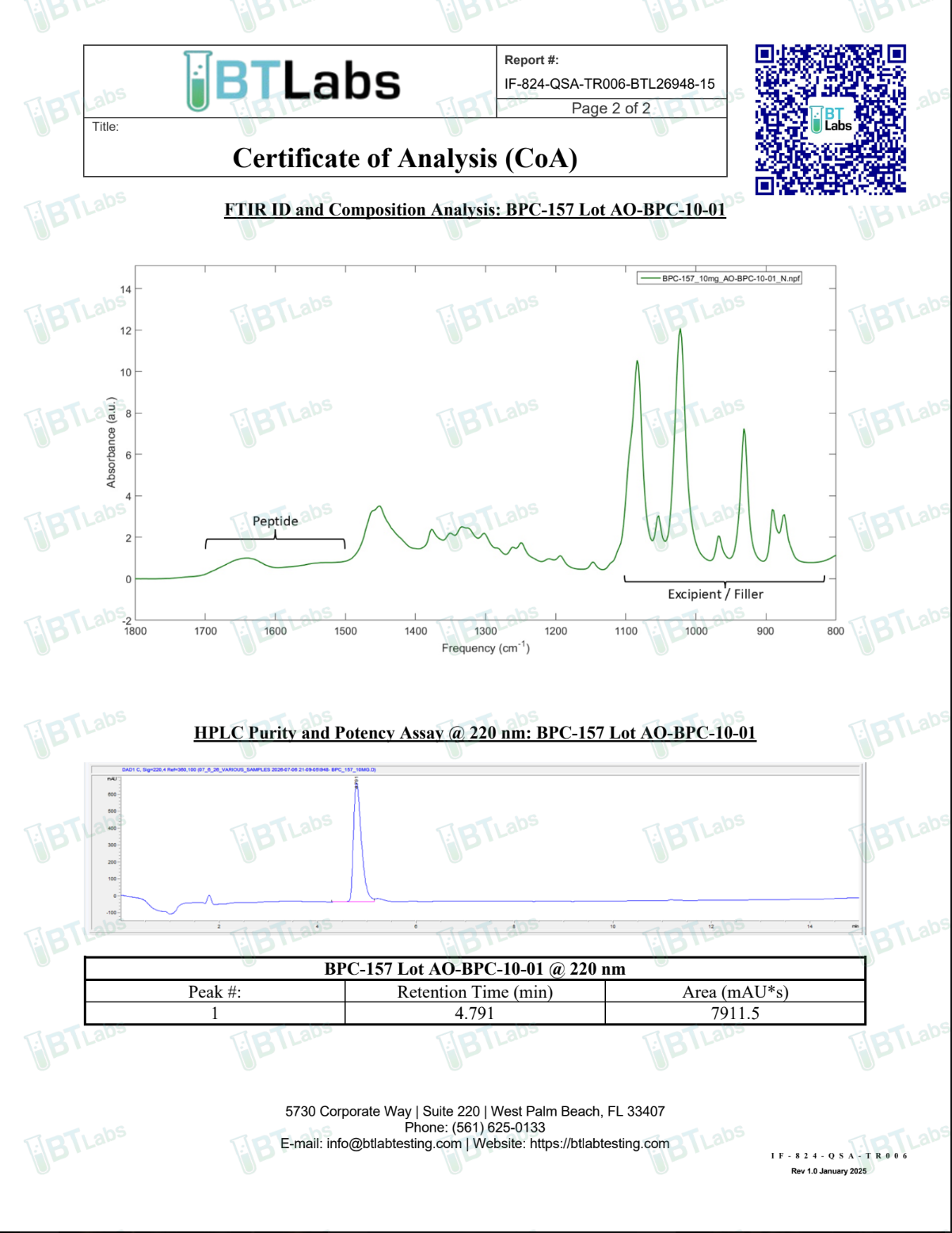
Overview: BPC-157 is a synthetic peptide fragment derived from a naturally occurring protein in gastric juice (Body Protection Compound). Often nicknamed the “Wolverine Peptide,” it is widely studied for its regenerative potential. In research contexts, BPC-157 has been investigated both on its own and in combination with TB-500 (Thymosin β-4 fragment) as the so-called “Wolverine Stack.”
User reports often describe noticeable improvements in mobility and soreness reduction within 1–2 weeks of use, though data are anecdotal and not clinical proof.
BPC-157 is a peptide of significant interest for regenerative research. Alone or in blends like the BPC-157 + TB-500 “Wolverine Stack,” it is widely discussed for potential healing and recovery applications in preclinical and anecdotal settings.
Research Use Only: BPC-157 is provided strictly for laboratory and research purposes. It is not approved for human consumption, medical, or veterinary use.
All content and information provided are for educational and research reference purposes only. This product and its associated data have not been evaluated by the U.S. Food and Drug Administration, and no claims are made regarding the diagnosis, treatment, cure, or prevention of any disease. No representations or warranties are made regarding safety, effectiveness, or outcomes.
This product is intended strictly for in vitro laboratory research use only and is not for clinical use. It is not approved for human or animal administration and must not be used in food, dietary supplements, pharmaceuticals, cosmetics, or any consumer applications.
By purchasing from Alpha One Nutrition, the buyer affirms that they are a qualified researcher or institution with the appropriate training and facilities to handle research compounds in compliance with all applicable laws and regulations. All sales are final.
| Weight | 1 lbs |
|---|
Sign In Before Your Purchase
Sign in to access your account.
Please Create An Account To Check Out
Create your account to access everything you need.
You must be at least 21 years of age All products on this website are to be used strictly only for research purposes. The products on this website must not be used for either human or animal consumption or diagnosing, treating, curing, or preventing any disease.
*You must be at least 21 years of age All products on this website are to be used strictly only for research purposes. The products on this website must not be used for either human or animal consumption or diagnosing, treating, curing, or preventing any disease.
Reviews
There are no reviews yet.